See prices From 179 EUR · Free cancellation available
Contents
A boat tour to Capri from Positano is a different trip than any coastal cruise along the Amalfi Coast itself: you’re crossing open water to a separate island, not tracking the mainland shoreline, and that distinction changes the price, the duration and what you’ll actually see once you arrive. This is the single highest-demand boat trip departing Positano, and for good reason.
I’ll walk through shared versus private crossings, realistic prices and timing, what Capri itself is actually like once you land, and where I’d send you if you’re departing from somewhere other than Positano. Price, duration and how many people share the boat are exactly the attributes that separate one Capri crossing from another, and the same three attributes separate every tour on this site too, so it’s worth seeing what’s actually included across all eight Amalfi Coast boat bookings before you commit to a departure town.
What Does a Boat Tour to Capri from Positano Actually Involve?
A typical Capri crossing from this coast is a full-day trip: a scenic boat ride out, several hours of free time on the island itself, and a return crossing later in the afternoon. I’d expect somewhere between five and eight hours total, depending on whether your operator includes a guided loop around the island’s coastline before dropping you ashore.
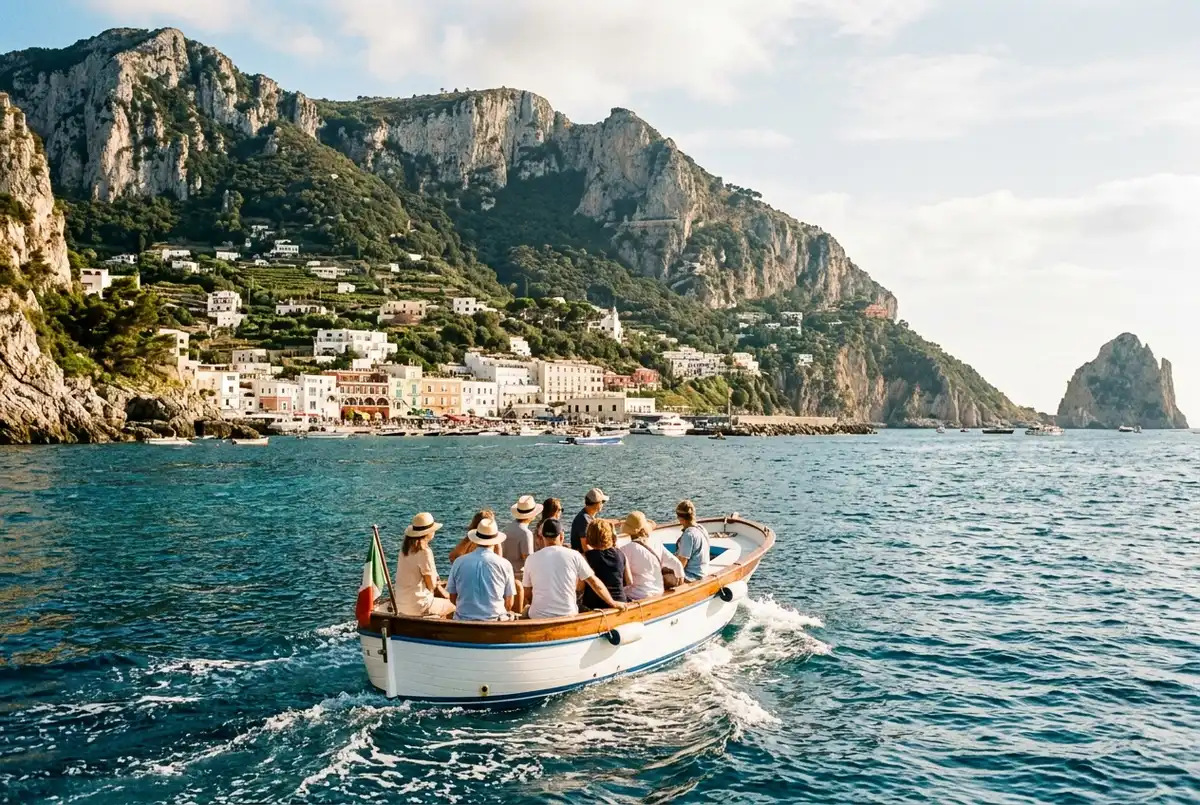
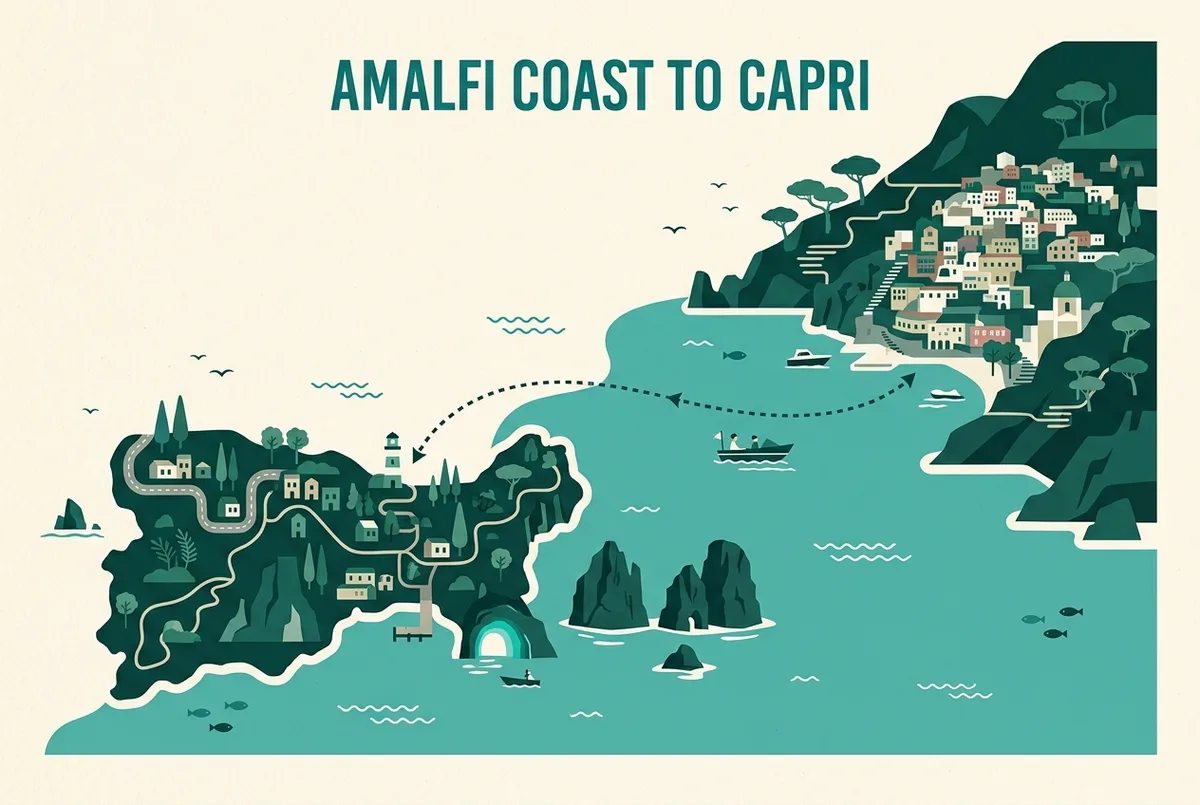
My honest take is that this is a genuinely different product from a Positano coastal cruise, not a longer version of the same thing. You’re not swimming at the Fiordo di Furore or passing the Emerald Grotto on this trip; you’re sailing past Capri’s own Faraglioni sea stacks and, conditions allowing, into the Blue Grotto, a sea cave that’s entirely separate from anything on the mainland coast.
Check prices & dates
Ready to visit?
Book your tickets in advance: popular time slots sell out.
Shared Crossing or Private Boat: Which Should You Book?
I’d default to a shared crossing for most travelers, the same way I would for any coastal cruise on this coast. It’s the better value per person, it still gets you the full island day, and the crossing itself is short enough that sharing a boat for an hour each way barely changes the experience.
Private charters earn their price once your group is large enough to split the per-boat cost reasonably, or once you specifically want control over when you leave Capri rather than sticking to a fixed return time. My private boat tour to Capri guide breaks down exactly where that math starts to work in your favor.
How Much Does a Capri Day Trip from Positano Cost?
Expect a wide range depending on departure town, group size and whether a guided boat loop around the island is included. Shared crossings from this stretch of coast have run anywhere from around EUR 75 on the lower end up to roughly EUR 150 or more once drinks, snorkeling gear and a longer island stay are built in, though I’d always check the current listing rather than treat any number here as fixed, since prices move with season and demand.
I’d budget toward the higher end of that range if a guided loop past the Faraglioni and a stop at the Blue Grotto matter to you specifically, since the cheapest listings sometimes skip the boat tour around the island entirely and just drop you at the harbor for the day.
How Does a Capri Crossing Compare in Price to a Regular Amalfi Coast Boat Tour?
Capri crossings generally cost more than a comparable coastal cruise on this coast, and I’d budget for that rather than expect Capri day pricing to match a Positano or Amalfi departure. A shared Amalfi Coast cruise with swimming and snorkeling can start from under EUR 100, while a Capri crossing covering similar hours more often starts closer to EUR 75 on the cheapest end and climbs well past EUR 100 once a guided boat loop and the Blue Grotto are built in.
I’d chalk the gap up to the extra distance and the added complexity of the Blue Grotto stop, not operators simply charging more for a more famous name. If budget is tight and Capri itself isn’t essential, a coastal cruise genuinely delivers more swimming and scenery time per euro than a Capri day does.
What’s There to Actually Do on Capri Once You Arrive?
More than most first-time visitors expect. The Faraglioni, three dramatic limestone stacks rising out of the sea, are the island’s most photographed feature and usually part of any boat loop. The Blue Grotto, a sea cave lit an almost unreal electric blue by refracted sunlight, is the other headline sight, though I’d flag that it depends entirely on calm conditions and sometimes closes for rough seas or high tide.
Beyond the water, Capri town and the quieter village of Anacapri both sit up on the island itself, reachable by funicular or bus from the main marina. I’d set aside at least an hour of your island time for one of the two if a boat-only day feels too narrow, since both offer a genuinely different pace than the harbor area most boat tours land at.
My honest pick between the two: Capri town for a first visit, since the funicular ride up from the marina is quick and the famous piazzetta, ringed by cafes, gives you an easy, low-effort way to sit down after the crossing. Anacapri sits higher up and feels noticeably less crowded, which I’d choose instead if you’ve already seen Capri town on a previous trip or specifically want quieter streets over the postcard piazza. Either way, I wouldn’t try to fit both into a single boat-day itinerary alongside a Blue Grotto stop, since something will end up rushed.
Is Capri Actually Part of the Amalfi Coast, or Somewhere Else Entirely?
It’s its own island, and I think this trips up more travelers planning this trip than you’d expect. Capri sits in the Bay of Naples, separate from the Amalfi Coast peninsula, which is exactly why a Capri day trip takes a dedicated boat crossing rather than just being a longer version of a coastal cruise.
My is Capri on the Amalfi Coast guide covers this geography question properly, along with a ferry-time comparison by departure town, if you want the fuller picture before booking.
Can You Visit the Blue Grotto on Every Capri Crossing?
Not guaranteed, and I’d go in knowing that rather than being disappointed on the day. The Blue Grotto depends on sea conditions and tide, and operators close access without much notice when the water’s too rough or too high at the cave’s low entrance. Some itineraries build in a dedicated Blue Grotto stop; others treat it as a weather-permitting bonus rather than a fixed inclusion.
My Capri Blue Grotto boat tour guide goes into which listings actually prioritize the cave versus which ones just pass near it, whether you’re departing from Positano or from further along the Amalfi side.
What If You’re Departing From Amalfi Town Instead of Positano?
The crossing runs longer, and I’d plan your day around that rather than assuming Amalfi works on the same timing as Positano. Amalfi sits a bit further from Capri than Positano does, which stretches the round-trip crossing time even before you factor in however long you spend on the island itself.
My Capri boat tour from Amalfi guide covers the realistic journey time from that specific departure point and what a full day looks like once you account for the extra distance.
What About a Combined Capri and Amalfi Coast Trip from Sorrento?
Sorrento-based operators commonly sell this as a combo itinerary: a Capri crossing paired with a coastal stretch of the Amalfi Coast itself in the same day, rather than a Capri-only trip. It’s a genuinely different product from either a pure Capri crossing or a pure coastal cruise, and worth knowing about if you’re staying on the Sorrento peninsula specifically.
Does This Site List a Capri Crossing You Can Book Directly?
Not currently, and I’d rather tell you that plainly than let you assume otherwise. The eight boat tours and charters on this site focus specifically on the Amalfi Coast’s own mainland stretch: Positano, Praiano, Amalfi town, Salerno and Sorrento departures with swim stops along that coastline, not a dedicated open-water crossing to Capri.
If reaching Capri specifically is the whole point of your trip, I’d search GetYourGuide directly for a current Capri day trip departing your chosen town rather than trying to stretch one of this site’s coastal cruises to cover it, since none of them actually make the crossing. If, on the other hand, you decide the Amalfi Coast’s own cliffs, coves and swim stops are a better use of your one boat day than the island crossing, the small-group Positano boat tour is the product I’d point you toward instead, Emerald Grotto views and a swim stop at the Fiordo di Furore included.
What’s the Best Time of Year for a Capri Day Trip?
Late May through September gives you the most reliable sea conditions and the best odds of the Blue Grotto actually being open, and I’d plan around that window if your dates are flexible. June and the first half of July strike the balance I’d personally pick: warm, calm water without quite the crowd density of August, when both the island’s marina and its narrow streets feel genuinely packed.
Shoulder-season crossings in April, early May or late September still run, and I’d consider them if you’re more interested in the scenery and the town itself than a long day swimming, since the water runs cooler and crowds thin out noticeably. I wouldn’t plan a Capri crossing from November through March at all, since most small-boat operators on this coast pause for the season and rough winter seas make the Blue Grotto especially unreliable.
Do You Need a Guide on Capri, or Can You Explore Alone?
Most boat crossings land you at Capri’s main marina and leave the island itself up to you, so I’d treat the boat ride as transport plus a scenic loop rather than a fully guided island tour. Some operators do include a guide for the boat portion specifically, pointing out the Faraglioni and explaining the Blue Grotto’s geology, but that’s different from a guided walking tour once you’re ashore.
I’d plan to explore independently once you land, since Capri town and Anacapri are both easy to navigate without a guide, well signed and small enough that getting lost costs you minutes, not hours. If you’d rather have someone show you around on land too, I’d book that separately from your boat crossing rather than expect it bundled in automatically.
What Should You Pack for a Capri Boat Day?
Beyond the basics, swimwear, a towel, sunscreen, I’d pack comfortable walking shoes if you plan to explore Capri town or Anacapri on foot, since both involve some uphill walking and uneven, centuries-old paving. A light layer for the boat ride is worth having too, since open water can feel breezier than the sheltered Amalfi coastline you’re used to from a Positano cruise.
I’d also bring more cash than you think you need. Capri’s marina area and its famous piazzetta both run noticeably pricier than Positano or Amalfi for food and drink, and smaller vendors on the island don’t always take cards. If seasickness is ever a concern for you, I’d take whatever remedy works before boarding, since the open-water crossing to Capri has more swell than a sheltered coastal cruise along the mainland.
How Far in Advance Should You Book a Capri Crossing?
I’d book at least two to three weeks ahead for a summer date, same advice I’d give for any popular boat trip on this coast. Capri crossings in particular sell out fast in July and August, partly because demand is high and partly because a meaningful share of travelers decide on the trip only once they’re already in Positano or Sorrento.
If the Blue Grotto specifically is a priority, I’d also build in a backup day if your schedule allows it, since the cave’s weather-dependent access means your first-choice date isn’t fully guaranteed regardless of how far ahead you book.
My Honest Recommendation
If Capri itself is the goal, book a dedicated shared crossing and treat the Faraglioni loop and a Blue Grotto attempt as the two things to confirm are actually included before you pay. If your group is large enough to make the per-boat math work, or you want full control over your return time, the private option is worth the premium.
I’d also say this: don’t let the Faraglioni photos talk you into a rushed, two-stop version of this trip if your actual schedule is tight. A Capri crossing squeezed into half a free day usually means standing in line for the Blue Grotto’s rowboat transfer, a short loop past the rocks, and barely enough time to eat before heading back to the dock. If that’s genuinely all the time you have, I’d rather you spend it on a shorter Amalfi Coast swim stop closer to where you’re staying than burn most of a day crossing to an island you’ll only see for an hour.
Capri draws a lot of day-trippers for a reason, I just wouldn’t book the crossing assuming it’s the same product as a coastal Amalfi cruise, because it genuinely isn’t.
Frequently Asked Questions
How long does a boat tour to Capri from Positano take?
Most full-day crossings run five to eight hours total, including the ride out, free time on the island, and the return trip, so I’d clear most of a day for it.
Is it worth paying extra for a private boat to Capri?
It’s worth it once your group is large enough to split the per-boat cost reasonably, or if controlling your own return time matters more to you than price.
Can you see the Blue Grotto on a day trip from Positano?
Often, but not guaranteed. Sea conditions and tide can close the cave without much notice, so I’d confirm it’s an included stop rather than assume it.
Is Capri far from Positano by boat?
Not especially, which is part of why it’s the most popular Capri departure point on this coast, though Amalfi and Sorrento crossings run a bit longer.
Do any of this site’s own boat tours go to Capri?
No, the current lineup covers the Amalfi Coast’s own mainland stretch. For a dedicated Capri crossing, I’d search GetYourGuide directly for a current listing from your departure town.
Is one day enough to see Capri properly?
For the harbor, the Faraglioni and a walk through Capri town, yes. For both Capri town and Anacapri at an unhurried pace, I’d want closer to a day and a half, though that’s rarely realistic on a single boat crossing.